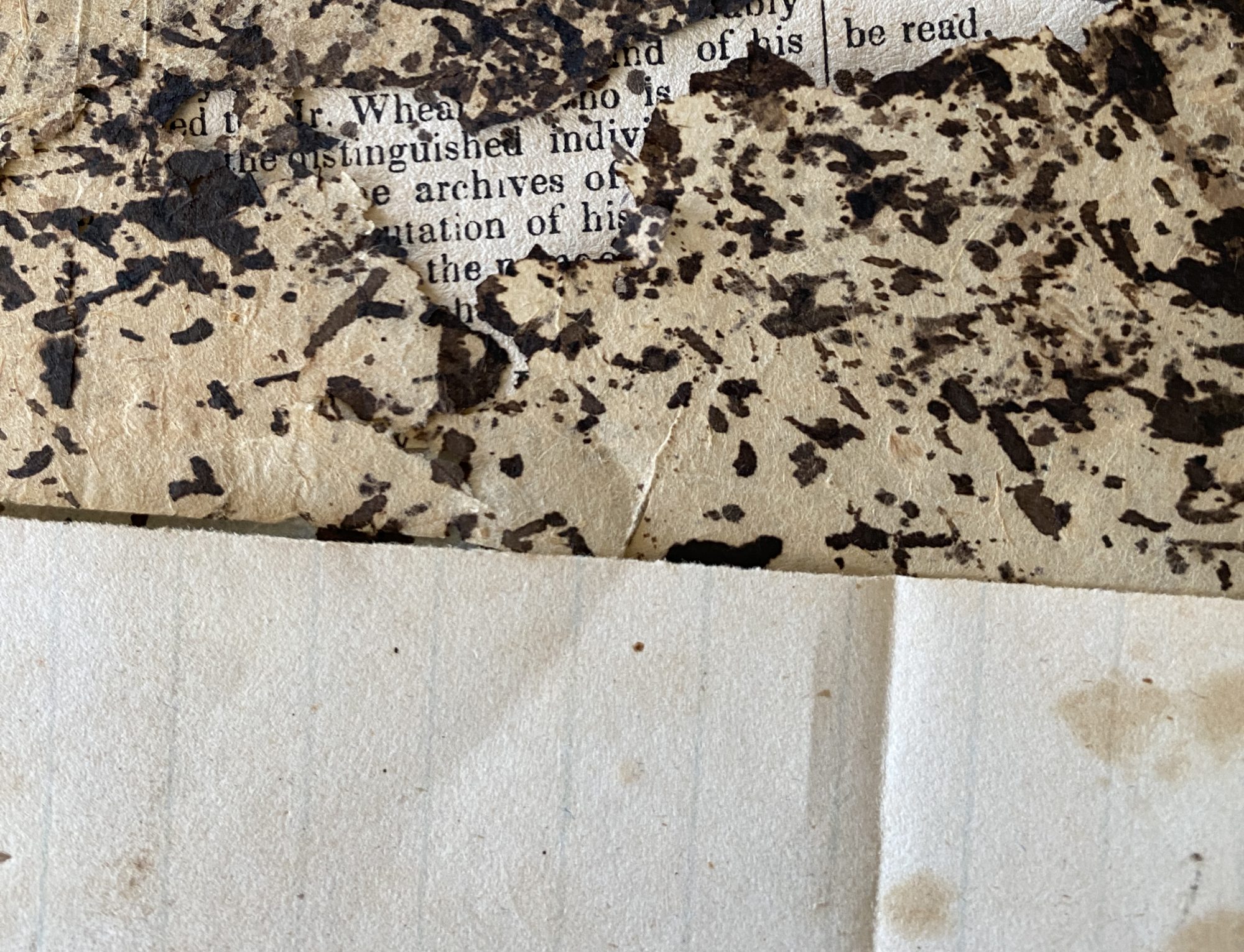
Auntie (Esther Coon Rider 1905-1993) was a natural cook known for her generosity of spirit and her love of cooking- frequently with ingredients grown in the kitchen garden. She thrived on providing pleasure and sustenance through her soul food- that heart and stomach warming fare needed after a day on the farm or a walk in the fresh country air. I treasure the time I spent in her kitchen and her recipes – those she created and those she collected.
What I did not realize until this extended time of contemplating and organizing (Covid-19) was that her collection of recipes included those from several doctors. For many centuries, the kitchen garden was functional; the plants and herbs grown had specific purposes whether nutritional, medicinal, and/or ornamental. From Chaucer’s knowledge of medicinal remedies in The Canterbury Tales (1392) to Shakespeare’s Friar Lawrence describing the healing powers of plants and herbs in Romeo and Juliet (1594) to the journals and notes of Auntie and her ancestors, cure for ailments was as close as the kitchen garden to be administered by a monk, the cook, the country doctor, or perhaps the local medicine man or woman.

In his article “Recollections of Red Hook: The Country Doctor”, Burton Coon (1869-1942) recalls, “The first doctor I ever met was Dr. Cookingham to whom I was taken for treatment when about five years old. He was then unmarried and boarding with the Widow Benedict, and believe had his office there.” (Memories of Old Red Hook From the Burton Coon Collection)
Mustard Plaster (Dr. Cookingham) 1 teaspoonful of dry mustard
1 teaspoonful of flour
Stir to a medium paste with vinegar.
Spread between two pieces of muslin cloth and warm before it is applied.
If a larger one is needed take larger equal portions of mustard and flour.
White of egg prevents blistering.
Cool Drinks for Fever (Dr. Morrison)
Juice of 2 oranges and 1 lemon and 1 quart of water
1 tablespoon cream of tartar
2 tablespoons of sugar
Tomato Cocktail (Dr. Morrison)
Large can of tomatoes with 1 cup of water
Put through colander.
Juice of 1 lemon
1 teaspoon of horseradish
1 teaspoon of worcestershire sauce
Pepper and salt
Imperial Drink for Illness (Dr. Cotter) 1 quart of water
Juice of 2 lemons
1 small teaspoon cream of tartar
Use as you would water.
With or without fever, these recipes are familiar to those who desire a cool drink today. I suspect Diane Lapis, local researcher and President of the Board of Trustees at the Beacon Historical Society, has included a version of the Tomato Cocktail in her book, Cocktails Across America: A Postcard View of Cocktail Culture in the 1930s, 1940s, and 1950s. I look forward to acquiring an autographed copy this summer.
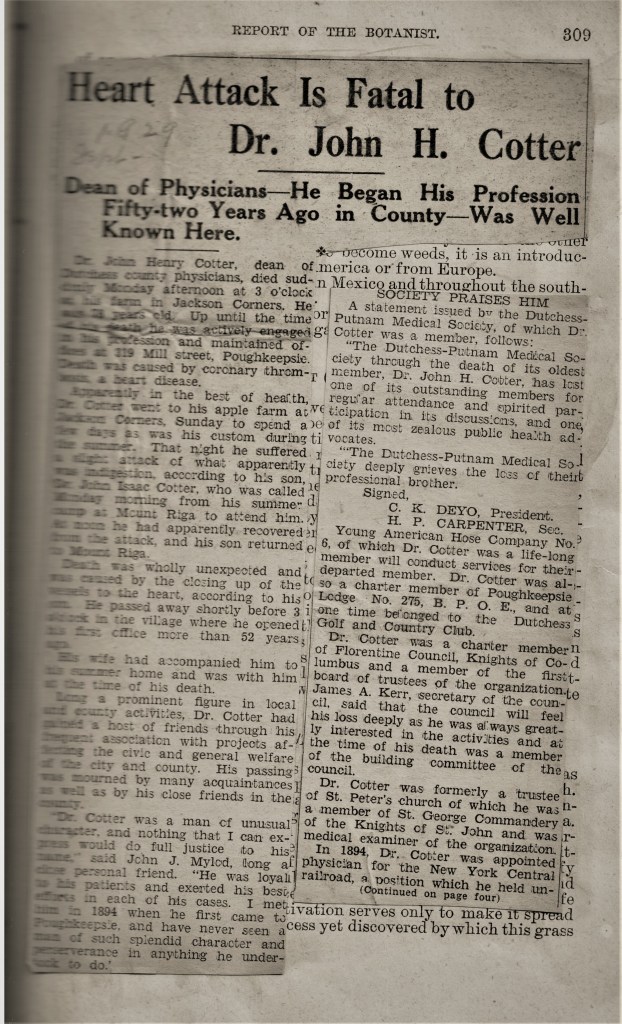
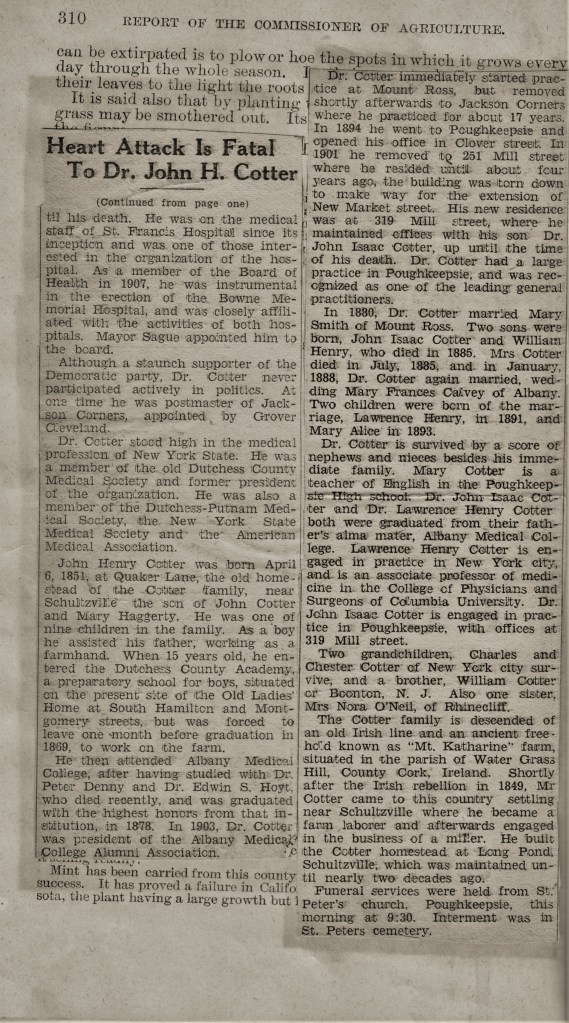
At any time in history, recognition of those in the healing profession is appropriate. Today as we experience Covid-19 history in the making, it is apropos to include Burton Coon’s recognition of physicians in his newspaper article “Recollections of Red Hook: The Country Doctor” written in the early 20th century. Coon concludes with these words, “The country doctor is fast passing out of our civilization. Time was when no storms were too heavy, no snow banks too high, no roads too bad to travel when he heard the call; and like old MacClure of Drumtochty, he rode or waded as the case required. If the case was a serious one, he would stay on the job, watching the progress of the disease, while the lamp of life burned low and the watchers stood about with anxious faces. And there were other risks. The doctor always stands a chance of contracting certain diseases himself. One doctor died of erysipelas which he got while treating a patient with the same disease. When there is an epidemic, the doctor is exposed to its contagion more than anyone else. Yet no one thinks of the doctor except to get his help. All honor to the worthy sons [and daughters -2020 update] of this profession who literally take their lives in their hands to minister to their fellow human beings.” (Memories of Old Red Hook From the Burton Coon Collection)
