Abolitionist James Marshall DeGarmo (1838-1919) was a birthright Hicksite Quaker in Dutchess County, NY. A pioneer in secondary education, he received an honorary Master of Arts from Princeton and a Doctorate of Philosophy for his success as an educator at the DeGarmo Institute in Rhinebeck and Fishkill-on Hudson (now Beacon). He was trained as a linguist and studied French, German, Latin and Greek, and he soon demonstrated his passion for the natural sciences.
An engaging and enthusiastic public speaker, he was sought after to speak at Anti-Slavery and Women’s Equality conventions. For over forty years, he was an active public speaker on topics ranging from glaciers to character building and Quakers to “What I Do Not Know”.
DeGarmo’s early Letters to the Editor of the anti-slavery newspaper “The Liberator” were thought-provoking and his book “The History of the Hicksite Quakers and their Doctrines” added to his legacy.
“So goes the good work on…”
Read my Flipbook about James Marshall DeGarmo.
View my recorded live presentation on James Marshall DeGarmo.
Palatine immigrant Christian Otto Schultz’s son Christian Schultz, Jr.’s adventures become more exciting in Letter #2 of Travels on an Inland Voyage Through the States of New York, Pennsylvania, Virginia, Ohio, Kentucky and Tennessee and through the Territories of Indiana, Louisiana, Mississippi and New Orleans; Performed in the Years 1807-1808; Including a Tour of Nearly Six Thousand Miles.
Schultz describes his travels in New York state from Utica, to Rome, Wood Creek, Fish Creek, Oneida Lake, to the outlet of the Onondaga River on which he learns by observing Native Americans (Oneida), discovers some superb fishing and acquires a new taste for eel.
Keeping NY History Alive and narrator Bonnie Wood join Christian Schultz, Jr. as he travels on the Hudson River and then the Mohawk in 1807. He provides details of the boats, the cities and more as he explores New York State along these iconic rivers. This is the first of 17 letters in the first volume. From gone to sea to gone to the river, the perpetual call to the water passes from father Palatine immigrant Christian Otto Schultz to son Rhinebeck, NY native Christian Schultz, Jr. Esq. who is the writer and the cartographer for Travels on an Inland Voyage Through the States of New York, Pennsylvania, Virginia, Ohio, Kentucky and Tennessee and through the Territories of Indiana, Louisiana, Mississippi and New Orleans; Performed in the Years 1807-1808; Including a Tour of Nearly Six Thousand Miles.
Just a torn scrap of paper preserved within the pages of another text of related topic, but not belonging~ Redman, Jacques and Hinman, Russell. “Natural Advanced Geography”. American Book Company. 1898.
Click the arrow on the Instagram post to view 7 more photos after the collage.
Photo Series “Advanced Geography 1898” : 1st image: Collage: Several photos from “Advanced Geography” ; 2nd image: Montauk Lighthouse; 3rd image: Adirondacks; 4th image: Albany; 5th image: the torn page; 6th image: Publisher; 7th image: Title page; 8th image: Webster Coon’s inscription on the inside of the front cover.
Just a Torn Scrap of Paper
Stories of the past are often tucked within the pages of old books. In this case, the details in the sketches on a torn scrap of paper found in student Webster Coon’s “Natural Advanced Geography” fascinates me. I am drawn first to the three circular focus frames placed above another sketch. The first circle is of Albany with a cityscape serving as a backdrop to the river, framed by a conifer. In contrast, the second focus frame depicts the serenity of the Adirondacks with the highest mountains in New York standing tall in the background. It is the central focus frame, but it is overlaid by the two other frames. National Maritime Historic Landmark Montauk Lighthouse constructed in 1796 and still operational as a navigational tool draws the viewer’s eye, yet there are two figures on the cliff and several below who in view of the rough waters and rocks of the Atlantic Ocean seem insignificant. In terms of details, the sketch of numerous water vessels beneath the three circles is the most remarkable of the collection.
This focus on water is fitting and explained in these two sections of text on the torn page: “Position and Rank” and “Outline and Boundaries”.
Position and Rank
“The geographical position of New York, – between the Great Lakes on the west, and the Atlantic Ocean on the south-east, – together with its natural facilities for water-communication, enlarged by canals, has given the state its foremost rank in the Union for population, commerce, and wealth, and its title of the “Empire State”.
Just a torn scrap of paper preserved within the pages of another text of related topic, but not belonging~ Redman, Jacques and Hinman, Russell. “Natural Advanced Geography”. American Book Company. 1898.
Outline and Boundaries
“The outline of this state is very irregular. Only a little over one-third of its boundary consists of straight lines, the other two-thirds being formed by bodies of water, including Lake Erie, the Niagara River, Lake Ontario, part of the St. Lawrence River, and Lake Champlain. The linear boundaries make about 541 miles; the water boundaries, 879 miles.”
Just a torn scrap of paper preserved within the pages of another text of related topic, but not belonging~ Redman, Jacques and Hinman, Russell. “Natural Advanced Geography”. American Book Company. 1898.
Discover
What will I discover next within the pages of an old book? Share your findings in the comments section.
The exhibit “Whispers of the Castle Keep” from the Bannerman Castle Trust intrigues me; the suspense builds as I wait until Spring to visit Bannerman Island.
Beacon Historical Society holds an ever-expanding collection of interest to local history buffs and family history aficionados. From a reel manufactured by Toy Krofters, a Bookie Blox collection and bricks from local brickyards to business directories and family history files, BHS is a must-visit Hudson Valley site.
The exhibit “Whispers of the Castle Keep” from the Bannerman Castle Trust intrigues me; the suspense builds as I wait until Spring to visit Bannerman Island. From a shield and rifle to a romance which includes illustrations depicting how the bridegroom won his young bride from her intended the Reverend, the collection is well-executed. The docent presents captivating vignettes of selected artifacts. He not only sparks interest in the local history surrounding the Castle but also plays his part in “Keeping NY History Alive”.
Contrary to being a weekend getaway, the castle in “the mighty Hudson” was an arsenal, a storage facility for Francis Bannerman’s military surplus business in New York City. This does not deter me; I will visit Bannerman Island! Stone walls built centuries ago and abandoned buildings lure me as gold mines captured the imaginations of our ancestors.
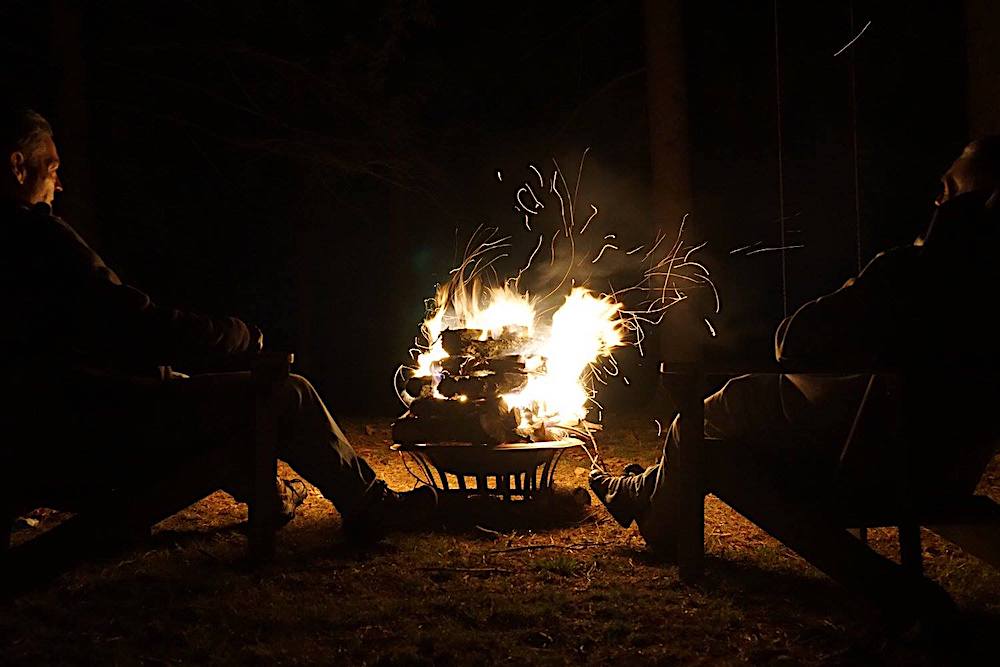
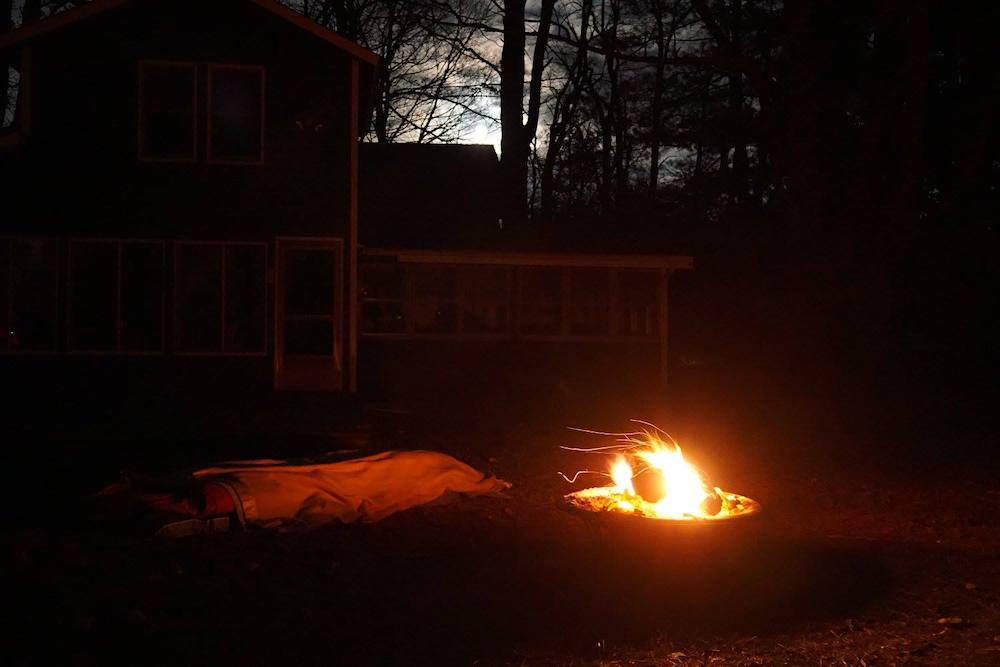
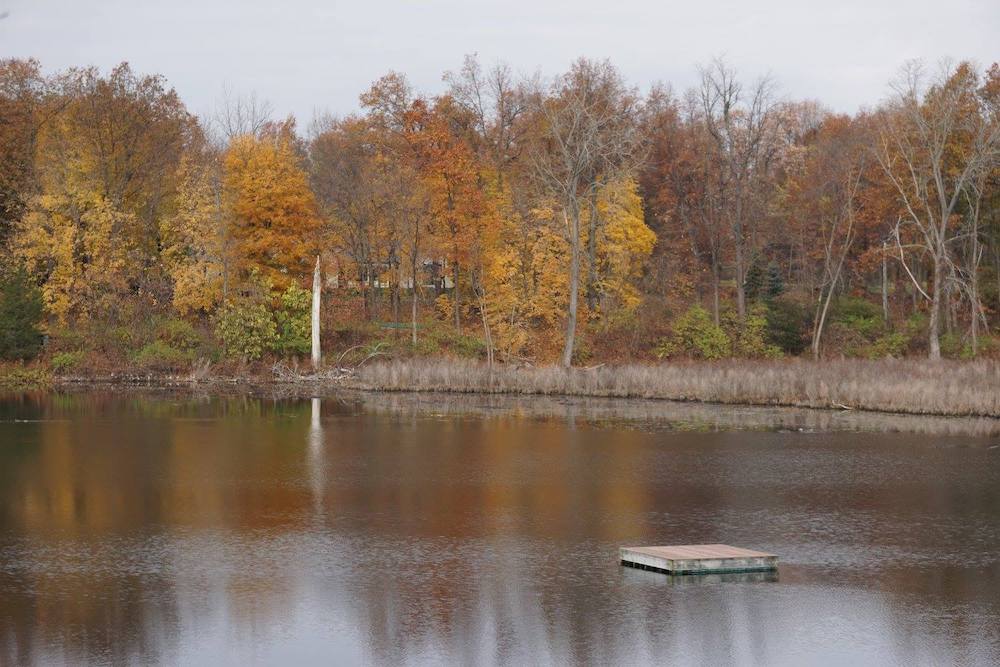
Shook’s Pond; Series “Closing Up the Cottage for the Winter 2014”; Photo by Dave ShookRobert Shook at Shook’s Pond; Series “Closing Up the Cottage for the Winter 2014”; Photo by Dave Shook
How do we live a life well-lived?
Reflecting on our own lives seems to naturally follow attendance at a memorial service, yet it can be overlooked in the daily living of life. Whether sitting in a rooftop garden in Manhattan, walking in the local park bursting with color in all seasons, or escaping to a summer cottage at the lake, the need to commune with nature is ingrained within us.
After attending a service in the Hudson Valley this weekend, I recognized the beauty of the day- misty and overcast while listening to the minister’s words and the treasured memories of family and neighbors. Set in a grassy rise overlooking the pond on his ancestor’s farm and imagining his daily swim, we could appreciate a life well-lived while hearing the sounds of Nature. By living a life driven by his passion for music and the natural world, Robert Shook discovered his life well-lived.
On the drive home, I questioned myself:
How do I live a life well-lived?
While reflecting on the importance of nature in my life, I re-read an inspiring passage entitled “The Approach of Day” originally scribbled on a faded scrap of brown wrapping paper by my great-grandfather Burton Coon in 1888.
The Approach of Day
All is dark. Night has long settled o’er hill and vale; the birds have ceased their timeful melody; the whir of the partridge, the chirp of the cricket, the chatter of the squirrel are no more heard; the insect world is lost in slumber. The beasts of the field and the fowls of the air are alike resting their weary frames in sweet repose; all Man, the lord of creation, is fast locked in the embrace of sleep, and all the sounds of nature have passed into temporary oblivion. Silence reigns supreme.
With Robert Shook ; Series “Closing Up the Cottage for the Winter 2014”; Photo by Dave Shook
The night advances. Still all is dark, but the silence is at last broken by the sweet heralds of the dawn- the birds. They are the first to disturb the hitherto unbroken solitude of the night by singing praises to their creator. The melodious strains catch the ear of the almighty, and he is glad. The fowls of the farmyard too have spoken; “Nature hath found a voice”, and silence reigns no more.
Series “Closing Up the Cottage for the Winter 2014”; Photo by Dave Shook
While this wonderful change is progressing, another and equally great one is taking place in the atmosphere. At first, all was silent and dark; now the silence has been broken, and the gray mists of the morning like silent spectres begin to rise from the rivers and lakes, imparting a damp smell and chilly feeling to the air. The mists are as yet invisible, for all is dark. But wait a moment, now look toward the eastern skies; a faint gray streak is plainly visible; this lengthens and broadens until it finally extends along the whole eastern horizon. The morn advances as the stars in the east begin to pale and shed a softer light; those in the west still shine with their brightness. Wait another moment, the oriental skies are tinged with purple and scarlet and gold, at first darkly, then brighter and brighter until the whole eastern heavens are aglow with beauty and loveliness. The grandeur of the night is fast fading into the glories of the morning. The stars in the west have paled and faded and are seen no more while the western hills glow with the beauty reflected from the eastern skies.
Time for a Swim at Shook’s Pond; Series “Closing Up the Cottage for the Winter 2014”; Photo by Dave Shook
Glorious scene! What majestic changes have taken place. Silence has been broken; the close thick atmosphere of the night has been dampened by the mists of the morning; darkness has fled away; and last of all the lord of day arises from behind the hills, and with a brightness too severe for the gaze of man, begins his daily course, as “Bright aurora’s rosy fingers open wide the gates of day”.
The night has gone; the morning has dawned; Nature’s glorious resurrection is at last completed: it is day.
Coon, Burton Barker. “The Approach of Day”. Shookville, New York. June 24, 1888.
How will you make this day a part of your life well-lived?
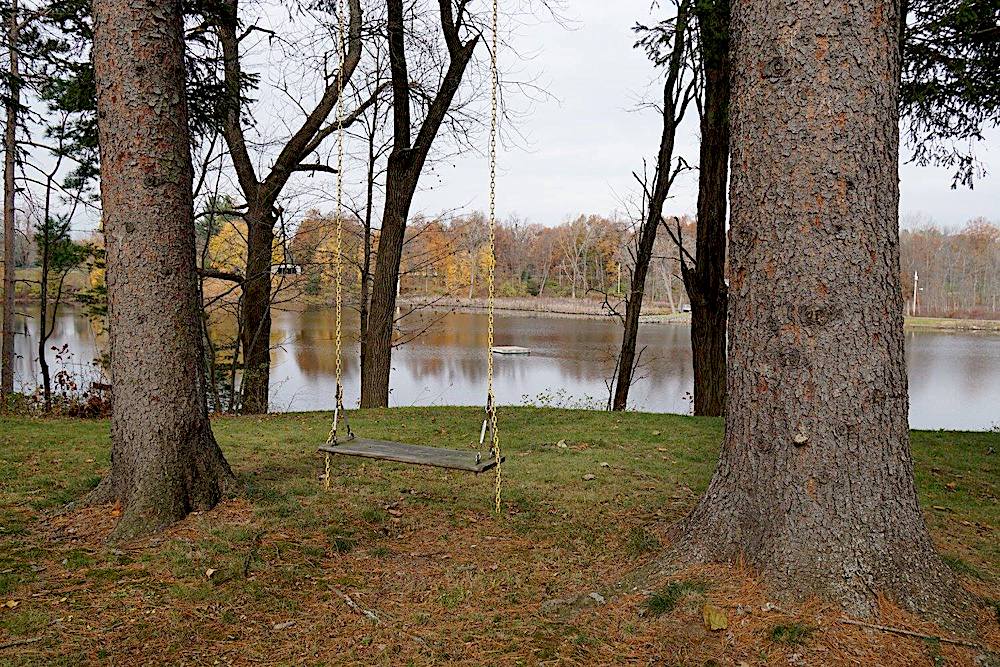
“Meditation Swing”; Series “Closing Up the Cottage for the Winter 2014”; Photo by Dave Shook
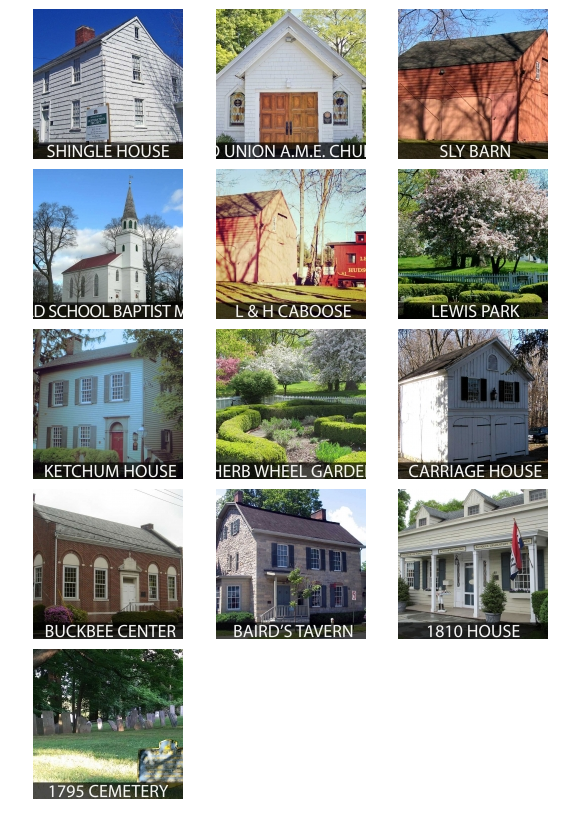
Don’t miss the New Acquisitions Exhibit – Clothing, Textile, and Archives located at the Buckbee Center at 2 Colonial Avenue. Highlights include Civil War artifacts and fashion through the ages displays.
After hearing Cathryn speaking about the influence of the railroad on Warwick, tour the Shingle House, hear more about the railroad, and view the Lehigh and Hudson River Railway Caboose
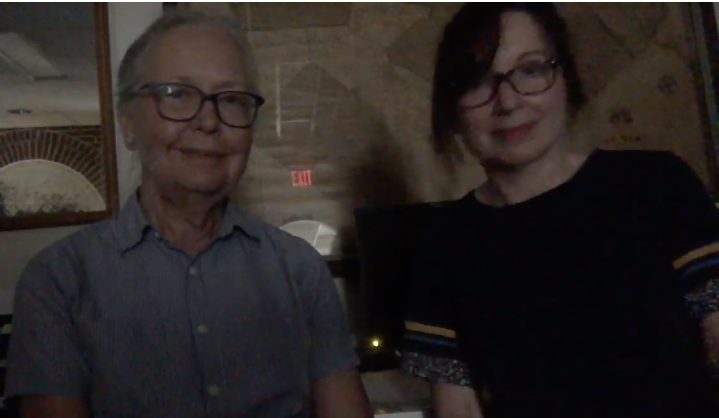
Local History Librarian Sue Gardner shares some compelling topics for further exploration.
Warwick, NY is not only an ideal location for outdoor activities, eclectic shops, and eateries but also a must-explore destination for researchers of local history and genealogy.
When I stayed at the Wardman Hotel in Washington, D.C. some years ago, I discovered that, one of my favorite poets, accomplished Harlem Renaissance poet Langston Hughes was employed as a busboy when he shared a poem with hotel guest poet Vachel Lindsay in 1925. That was the beginning of a change of fortune for young Hughes.
Today, Sue Gardner shared a snippet of local history about Langston Hughes that sparked my curiosity about The Colony. Some thought-provoking lines written by Langston Hughes include:
“I’ve known rivers:
I’ve known rivers ancient as the world and older than the flow of human blood in human veins.
“1919 THE COLONY One of the community’s treasures, the historic hamlet off of Rt. 17A in the Nelson Rd. section was the first African-American resort community in the state of New York. Founded in 1919 by a group of prominent families from the city, it became a mecca for famous and influential professionals and artists. The “colony”, as it was known, hosted such luminaries as poet Langston Hughes, lyricist Cecil MacPherson and J. Rosamond Johnson, director of London’s Grand Opera House. Descendants of its founders still reside here.”
Sporting writer Henry William Herbert of the Herberts who resided at Highclere Castle (known by many now as Downtown Abbey) used the pen name Frank Forester. In Warwick Woodlands, he reminisced about his time spent traversing the woodlands of Warwick. See his books at the library. https://archive.org/details/warwickwoodland00herbgoog/page/n14





 Keeping NY History Alive - Story by Story