Abolitionist James Marshall DeGarmo (1838-1919) was a birthright Hicksite Quaker in Dutchess County, NY. A pioneer in secondary education, he received an honorary Master of Arts from Princeton and a Doctorate of Philosophy for his success as an educator at the DeGarmo Institute in Rhinebeck and Fishkill-on Hudson (now Beacon). He was trained as a linguist and studied French, German, Latin and Greek, and he soon demonstrated his passion for the natural sciences.
An engaging and enthusiastic public speaker, he was sought after to speak at Anti-Slavery and Women’s Equality conventions. For over forty years, he was an active public speaker on topics ranging from glaciers to character building and Quakers to “What I Do Not Know”.
DeGarmo’s early Letters to the Editor of the anti-slavery newspaper “The Liberator” were thought-provoking and his book “The History of the Hicksite Quakers and their Doctrines” added to his legacy.
“So goes the good work on…”
Read my Flipbook about James Marshall DeGarmo.
View my recorded live presentation on James Marshall DeGarmo.
Auntie (Esther Coon Rider 1905-1993) was a natural cook known for her generosity of spirit and her love of cooking- frequently with ingredients grown in the kitchen garden. She thrived on providing pleasure and sustenance through her soul food- that heart and stomach warming fare needed after a day on the farm or a walk in the fresh country air. I treasure the time I spent in her kitchen and her recipes – those she created, those she collected and those she acquired from previous generations.
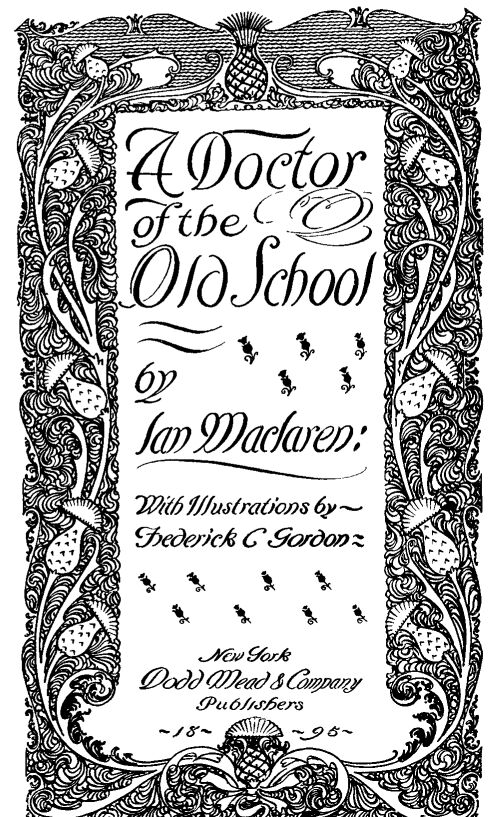
What I did not realize until this extended time of contemplating and organizing (Covid-19) was that her collection of recipes included those from several doctors. For many centuries, the kitchen garden was functional; the plants and herbs grown had specific purposes whether nutritional, medicinal, and/or ornamental. From Chaucer’s knowledge of medicinal remedies in “The Canterbury Tales” (1392) to Shakespeare’s Friar Laurence describing the healing powers of plants and herbs in “Romeo and Juliet” (1594) to the journals and notations of Auntie and her ancestors, cure for ailments was as close as the kitchen garden to be administered by a monk, the cook, the country doctor, or perhaps the local medicine man or woman (to be shared and developed in another post).
Mustard Plaster (Dr. Cookingham)
1 teaspoonful of dry mustard
1 teaspoonful of flour
Stir to a medium paste with vinegar.
Spread between two pieces of muslin cloth and warm before it is applied.
If a larger one is needed take larger equal portions of mustard and flour.
White of egg prevents blistering.
In his article “Recollections of Red Hook: The Country Doctor”, Burton Coon (1869-1942) recalls “The first doctor I remember was Dr. Cookingham to whom I was taken for treatment when about five years old. He was then unmarried, and boarding with the widow Benedict, and I believe had his office there” (Memories of Old Red Hook From the Burton Coon Collection).
Cool Drinks for Fever (Dr. Morrison)
Cool Drinks for Fever

Juice of 2 oranges and 1 lemon and 1 quart of water
1 tablespoon cream of tartar
2 tablespoons of sugar

Tomato Cocktail
Large can of tomatoes with 1 cup of water
Put through colander.
Juice of 1 lemon
1 teaspoon of horseradish
1 teaspoon of worcestershire sauce
Pepper and salt
1 quart of water
Juice of 2 lemons
1 small teaspoon cream of tartar
Use as you would water.
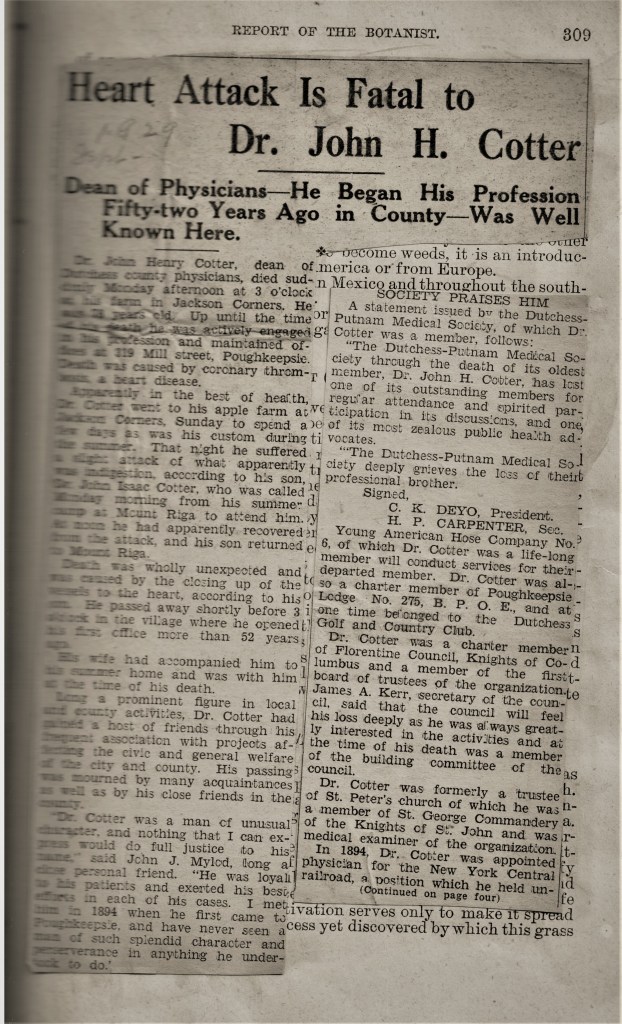
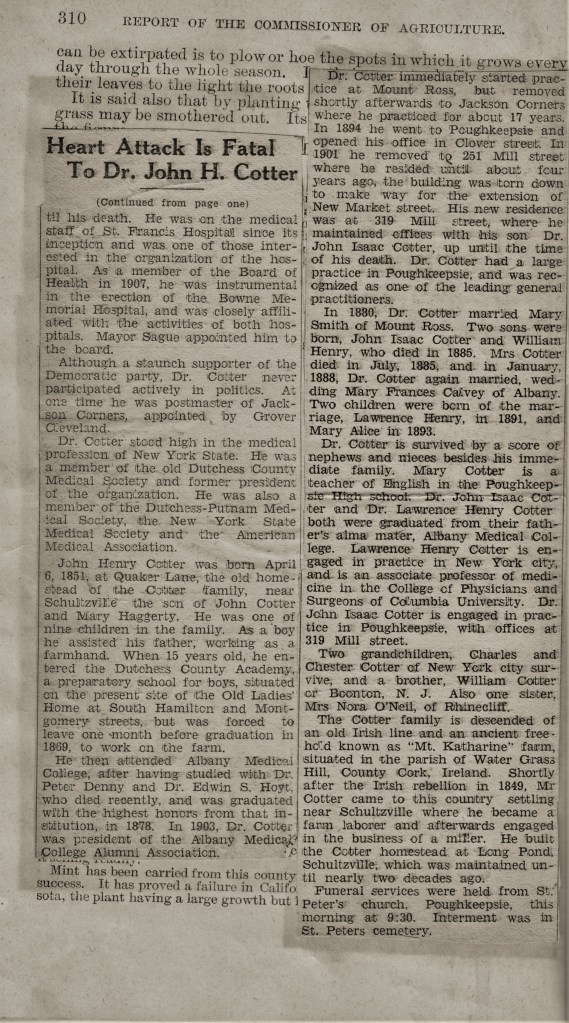
View the two page obituary of this renowned physician, owner of a farm in Jackson Corners.
Included in Burton Coon’s scrapbook in Report of the Botanist.Included in Burton Coon’s scrapbook in Report of the Botanist.
In Recognition of the Country Doctor
At any time in history, recognition of those in the medical profession is appropriate. Today as we experience Covid-19 history in the making, it is apropos to include Burton Coon’s recognition of physicians in his newspaper article “Recollections of Red Hook: The Country Doctor” written in the early 20th century. Coon concludes with these words, “The country doctor is fast passing out of our civilization. Time was when no storms were too heavy, no snow banks too high, no roads too bad to travel when he heard the call; and like old Dr. MacClure of Drumtochty, he rode or waded as the case required. If the case was a serious one he would stay on the job, watching the progress of the disease, while the lamp of life burned low and the watchers stood about with anxious faces. And there are other risks besides the weather and the roads. The doctor always stands a chance of contracting certain diseases himself. One doctor died of erysipelas which he got while treating a patient with the same disease. When there is an epidemic the doctor is exposed to its contagion more than anyone else. Yet no one thinks of the doctor except to get his help. All honor to the worthy sons [and daughters (2020 update)] of this profession who literally take their lives in their hands to minister to their fellow human beings” (Memories of Old Red Hook From the Burton Coon Collection).
The exhibit “Whispers of the Castle Keep” from the Bannerman Castle Trust intrigues me; the suspense builds as I wait until Spring to visit Bannerman Island.
Beacon Historical Society holds an ever-expanding collection of interest to local history buffs and family history aficionados. From a reel manufactured by Toy Krofters, a Bookie Blox collection and bricks from local brickyards to business directories and family history files, BHS is a must-visit Hudson Valley site.
The exhibit “Whispers of the Castle Keep” from the Bannerman Castle Trust intrigues me; the suspense builds as I wait until Spring to visit Bannerman Island. From a shield and rifle to a romance which includes illustrations depicting how the bridegroom won his young bride from her intended the Reverend, the collection is well-executed. The docent presents captivating vignettes of selected artifacts. He not only sparks interest in the local history surrounding the Castle but also plays his part in “Keeping NY History Alive”.
Contrary to being a weekend getaway, the castle in “the mighty Hudson” was an arsenal, a storage facility for Francis Bannerman’s military surplus business in New York City. This does not deter me; I will visit Bannerman Island! Stone walls built centuries ago and abandoned buildings lure me as gold mines captured the imaginations of our ancestors.
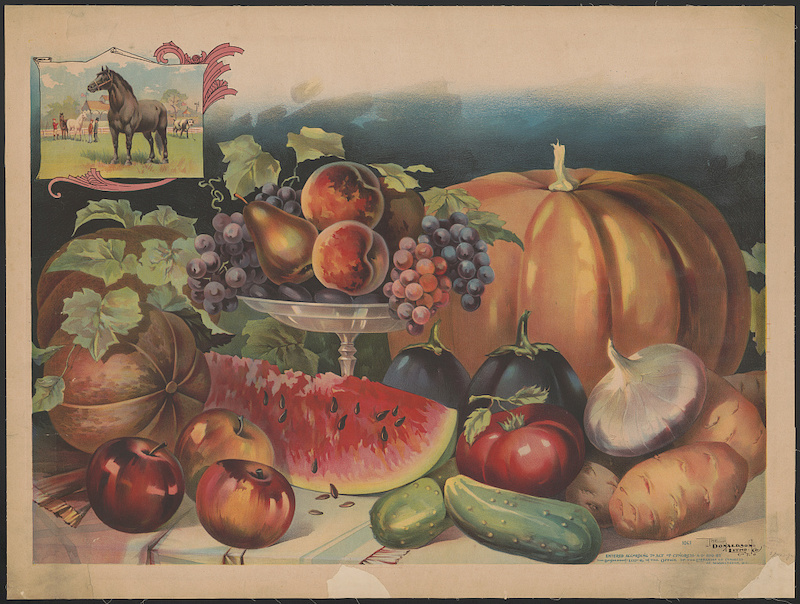
“Farm produce with small image of horse in the upper left corner”; chromolithograph. Library of Congress. 1893.
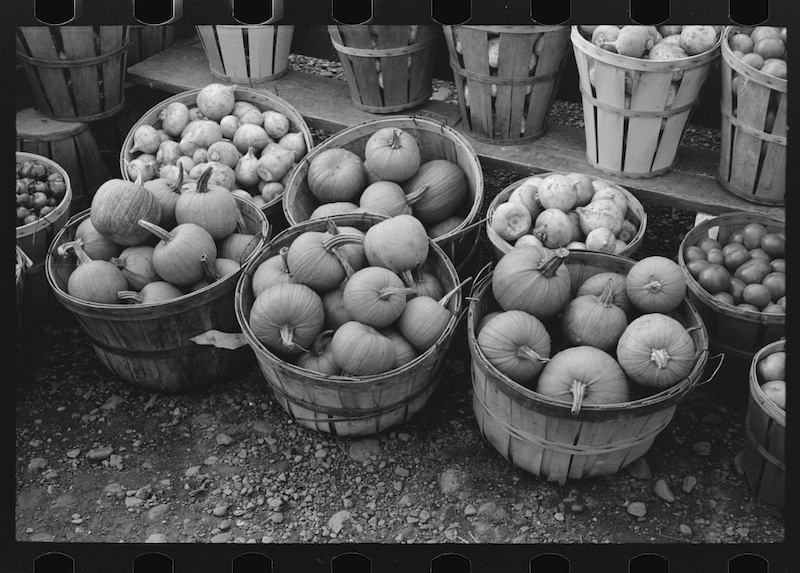
Picking the perfect pumpkin is a family tradition. Whether a miniature or the largest pumpkin in the field is chosen to adorn the front step, much discussion and deliberation ensues. Each year, the trip to the pumpkin field ignites memories beginning with “Remember when…”. The excitement and resulting anticipation heightens while bumping through the field on a wagon ride.
Children spring from the wagon and scatter through the field. Some will choose the first one spotted; others will wander for a while with much consideration; one great thinker seemingly arrives on each wagon ride. The most patient driver becomes restless. The other children begin to call. A set of parents begins to apologize as their child carries several pumpkins to a central location and checks for imperfections. Those that do not make the final cut may have a speck of dirt, a rough patch, or perhaps a slightly irregular shape, but the child knows that there is only one “Great Pumpkin, Charlie Brown”!
The Pumpkin
Oh, fruit loved of boyhood! the old days recalling, When wood-grapes were purpling and brown nuts were falling! When wild, ugly faces we carved in its skin, Glaring out through the dark with a candle within! When we laughed round the corn-heap, with hearts all in tune, Our chair a broad pumpkin,—our lantern the moon, Telling tales of the fairy who travelled like steam, In a pumpkin-shell coach, with two rats for her team!
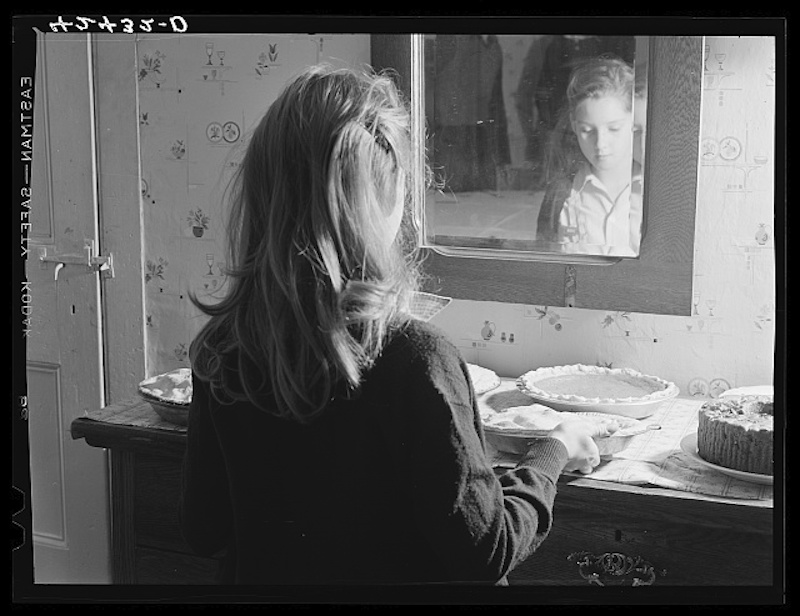
Harvest time on all parts of the farm was busy yet rewarding. In the kitchen, Auntie’s passion for cooking brought joy to family and friends. Each Autumn, I recall the aroma of Auntie’s pumpkin pie.
Auntie’s Recipe for Pumpkin Pie
2 cups of stewed pumpkin
1/2 teaspoon salt
1/2 teaspoon cinnamon
2/3 cup of sugar
1 teaspoon ginger
2 eggs
1 scant pint of milk
Bake 45 minutes.
Lee, Russell, photographer. Pumpkins and turnips near Berlin, Connecticut. Library of Congress. October 1939.Lee, Russell, photographer. Cutting up Pumpkin for Pie. Bakery San Angelo, Texas Library of Congress. November 1939.Delano, Jack. At the Crouch family Thanksgiving Day dinner. Pumpkin pies. Ledyard, Connecticut. Library of Congress. November 1940



 Keeping NY History Alive - Story by Story